If you’ve ever tried to learn a new language, you’ve probably been told to memorize vocabulary lists, drill grammar rules, and spend hours studying every week. But what if there was a more natural, science-backed method that allowed you to learn a language effortlessly—just by listening and understanding?
Enter comprehensible input, a language learning method that has been proven both scientifically and practically to be one of the most effective ways to pick up a new language.
What Is Comprehensible Input?
Comprehensible input is the concept that you learn a language by being exposed to content that is just slightly above your current level of understanding. In other words, you need to listen to or read language that you mostly understand but that also pushes you to learn new words and structures through context.
This method was pioneered by linguist Dr. Stephen Krashen, whose research has shown that input is key to language acquisition. Instead of focusing on direct grammar instruction or rote memorization, the comprehensible input method emphasizes listening to and understanding real language in context.
Why It Works: The Science Behind Comprehensible Input
According to Dr. Krashen’s research, language acquisition happens naturally when learners are exposed to meaningful, understandable input that is just beyond their current skill level. This process mirrors how children learn their first language—they are constantly hearing language in context, even if they don’t understand everything at first.
Over time, the brain begins to recognize patterns, infer meaning, and make connections between words and phrases. In this way, grammar and vocabulary are learned intuitively, without needing to be explicitly taught.
Key scientific reasons comprehensible input works:
- Natural Acquisition: It mimics how our brains are wired to learn language, similar to how we learned our first language.
- Contextual Learning: By hearing words in real-life sentences, learners naturally absorb grammar and meaning without the need for drills.
- Pattern Recognition: The brain naturally starts to recognize language patterns, helping you intuitively grasp grammar rules over time.
- Reduced Cognitive Load: Since the focus is on understanding content in context rather than memorizing rules, learners feel less overwhelmed and more engaged.
Comprehensible Input in Practice: How to Use It
So, how do you use comprehensible input in your own language learning journey? Here are a few practical ways to make the most of this method:
- Start with Simple Content: Choose material that is just above your current understanding. It should challenge you, but you should still be able to follow along with context. Audiobooks that introduce the most common vocabularey, with example sentences and translations, are excellent resources because they use frequent, everyday words in sentences that make sense.
- Focus on Context: Instead of trying to memorize every word, focus on understanding the overall meaning of what you’re hearing or reading. The context will help you pick up on new vocabulary and structures.
- Listen and Read Passively: One of the best parts about comprehensible input is that you can passively learn while doing other tasks. You can listen to an audiobook or podcast in your target language while driving, cleaning, or exercising. Even though you’re not fully focused, your brain is still absorbing the language.
- Gradually Increase Difficulty: As you get more comfortable, start exposing yourself to slightly more challenging material. Watch movies, listen to podcasts, or read books in your target language that push your comprehension.
How It Differs from Traditional Methods
Traditional language learning often relies on explicit instruction—learning grammar rules, memorizing vocabulary lists, and doing structured drills. While this can help in some ways, it can feel frustrating and unnatural, especially for busy parents or people with packed schedules.
Comprehensible input, on the other hand, takes the pressure off. It allows you to learn organically, much like how children acquire language without needing to “study.” Instead of thinking about the language, you experience it in context, allowing your brain to make natural connections over time.
Benefits of comprehensible input over traditional methods:
- More natural and intuitive: It taps into the way we are wired to learn.
- Less time-consuming: You can fit it into your day, passively, without dedicating hours to study.
- Less overwhelming: No grammar drills or rote memorization—just natural learning.
Real-World Results: The Power of Comprehensible Input
Learners who use comprehensible input often report faster progress, greater confidence in speaking, and a deeper understanding of the language. They can handle real-life conversations more easily because they’ve learned through context and real-world use, not just by memorizing isolated words or rules.
In fact, many language learners report being able to understand spoken conversation in their target language long before they feel confident speaking it themselves—thanks to the power of input. By hearing the language over and over, they start to feel the rhythm and structure of the language, which makes speaking easier when the time comes.
How You Can Get Started with Comprehensible Input
If you’re ready to experience the benefits of comprehensible input for yourself, you can start by incorporating passive listening into your daily routine. Whether you’re a busy parent or just someone who doesn’t have a lot of time to dedicate to study, this method is a game-changer.
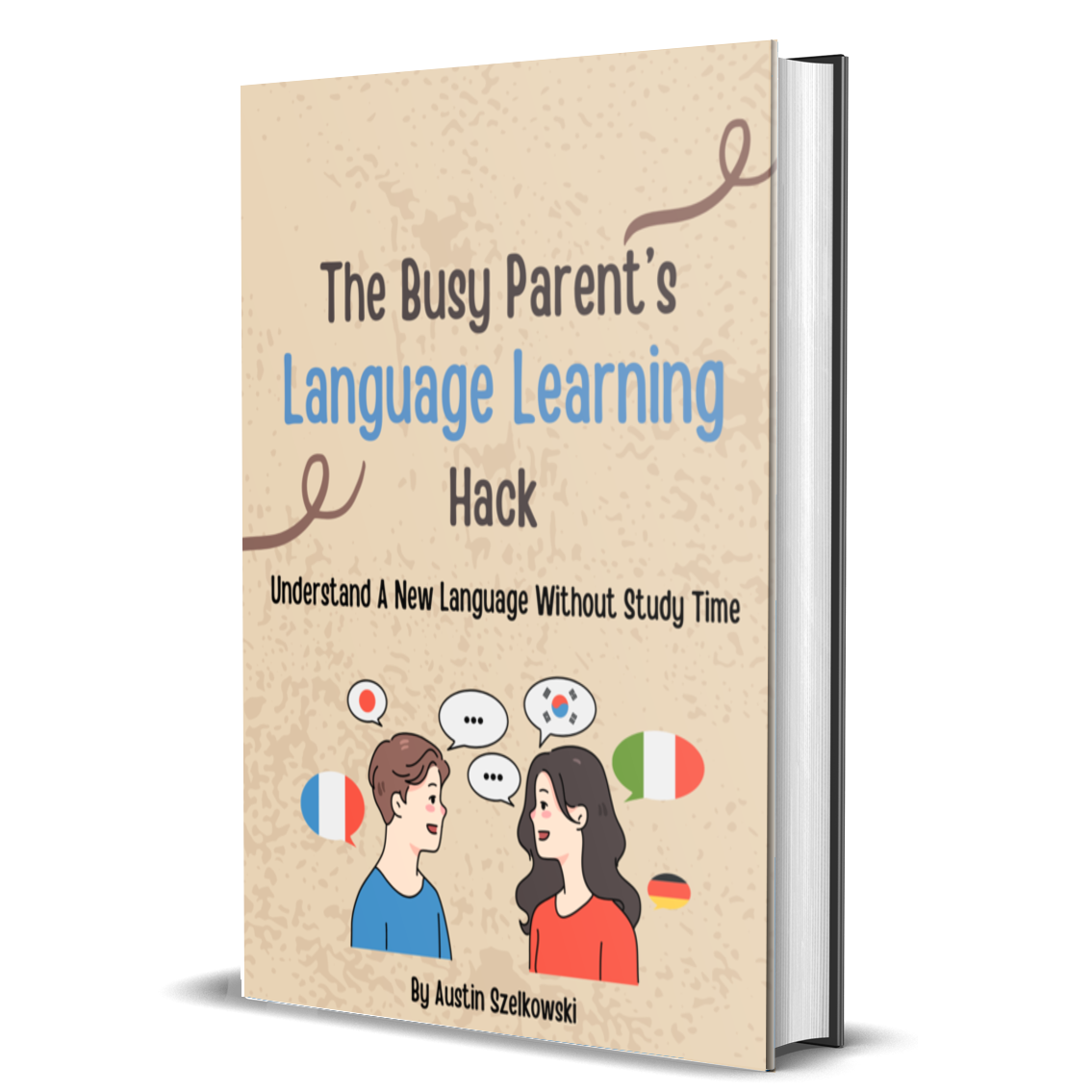
That’s why I created The Busy Parent’s Language Hacking Guide—a simple, actionable course designed to help you absorb a language passively. In it, I’ll walk you through exactly how to start using comprehensible input effectively, without needing any dedicated study time.
With The Busy Parent’s Language Hacking Guide, you can listen to high-frequency words and phrases while you’re doing everyday tasks like cleaning, driving, or exercising. Over time, you’ll start to understand up to 92.7% of spoken conversation, all without feeling like you’re studying.
Ready to start learning passively and naturally? Grab your copy of The Busy Parent’s Language Hacking Guide today and discover how easy it can be to acquire a new language—without study time!